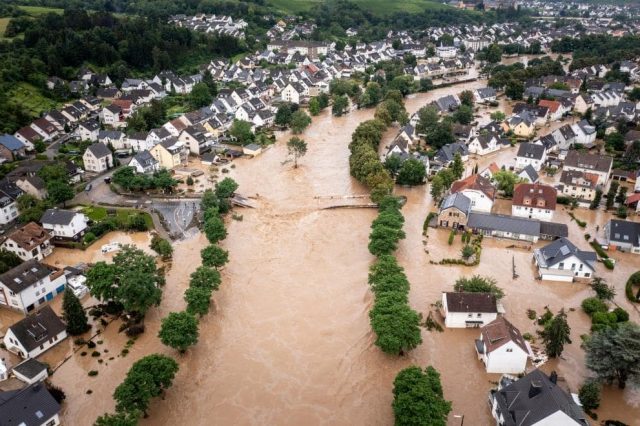
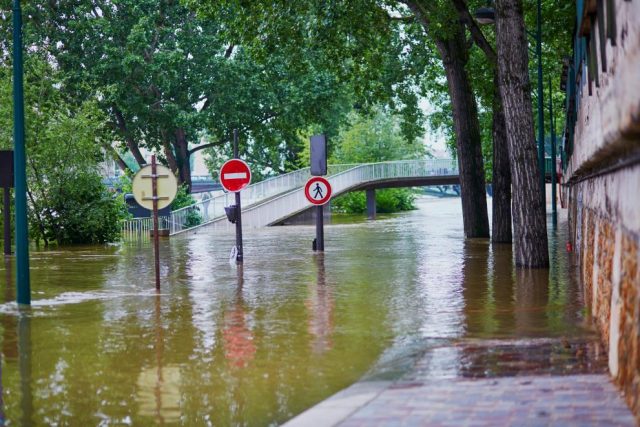
Here after are being presented guidelines for the protection of ourselves and other human beings, including people with special needs, in quiz format. The guidelines refer either to natural hazards related issues or specific guidelines about floods.
Are you aware of the general guidelines that exist in Greece and must be followed to protect yourself in case of intense natural phenomena? (How many of them can you recall?)
The correct answer is:
(SEVERE WEATHER PHENOMENA: General Instructions)
• Be constantly informed by radio and television on the progress of the phenomena. The General Secretariat for Civil Protection and the National Meteorological Service are the formal sources of information.
• In case of emergency call alternatively: the Police (100), the Fire Service (199) the National Center for Emergency Care/ “EKAB” (166) or the European Emergency Call Number (112).
• Place the above-mentioned phone numbers in a visible position inside your house and make sure that your children are informed of them, if they are able to use them. The same applies for all family members.
• Help your children learn important family data such as their last name, the address and the phone number of your home.
• Explain to all family members when and how to switch off electric power, natural gas and water supply, how to use the fire-extinguisher and how to call for help.
• Be equipped with emergency equipment, such as a first aid kit, fire extinguisher, torch and batteries, a portable radio etc.
• Take special care of children and the elderly.
What should you do to protect yourself and others from natural hazards in accordance with the general instructions when located in Greece?
The correct answer is:
General Instructions
• Be constantly informed by radio and television on the progress of the phenomena. The General Secretariat for Civil Protection and the National Meteorological Service are the formal sources of information.
• In case of emergency call alternatively: the Police (100), the Fire Service (199) the National Center for Emergency Care/ EKAB (166) or the European Emergency Call Number (112).
If located to another country check the relevant phone numbers and have these in mind instead of the above-mentioned ones.
• Place the above mentioned phone numbers in a visible position inside the house and make sure that your children are informed of them, if they are able to use them.
• Help your children learn important family data such as their last name, the address and the phone number of your home.
• Explain to all family members when and how to switch off electric power, natural gas and water supply, how to use the fire-extinguisher and how to call for help.
• Be equipped with emergency equipment, such as a first aid kit, fire extinguisher, torch and batteries, a portable radio etc.
• Take special care of children and the elderly.
Progress: 2 of 9
3.
During a flood what actions should we take to protect ourselves?
The correct answer is:
Flood adaptation strategies are needed to face the increased intensity and probability of floods due to global warming.
In accordance with the existing guidelines in Greece during the flood if you are indoors you have to avoid underground places and move to a secure higher point.
The correct answer is:
Instructions regarding floods provided by the Ministry of Climate Change and Civil Protection of Greece recommend the following:
If you are indoors: Avoid underground places and move to a secure higher point.
If you are outdoors: Do not cross torrents on foot or by car
Stay away from electric wires.
Abandon your car if it gets immobilized as it might be swept away or flooded.
Avoid areas where landslides have occurred.
In Greece the guide that you should follow to protect yourself after the flood provides instructions if you are outdoors such as:
The correct answer is:
Instructions after the flood from Ministry of Climate Change and Civil Protection of Greece
If you are outdoors: Stay away from flooded areas or areas dangerous to flood in the next hours
The flood is likely to have changed the known area characteristics and waters might have swept away parts of the streets, the pavements etc.
Dangers are imminent from broken pavements, areas with dangerous slope, mudslides etc.
The water is likely to be polluted from rubbish, dead animals or other materials.
Be careful not to obstruct rescue crews.
Don’t approach areas where landslides and rock falls have occurred.
Check if your house or place of work runs the risk of a possible fall of rocks.
If it’s absolutely necessary to walk or to drive in flooded areas: Try to find solid ground.
Avoid moving waters.
If you see a flooded street, stop and change direction.
Avoid stagnant waters that could be electric-current conductors if there are underground power cables or leaks.
Follow the authorities’ instructions.
What to do during restoration of damages
Before you begin restoration works: Remember: Even when flood waters recede danger still exists.
Contact the Authorities to ensure that the location of your home or your place of employment is safe to return, particularly if there was prior evacuation.
Switch off the electric supply even if the power company has switched off the whole area.
Turn off the water supply in case of potential damage to the water supply. )
The guidelines provide tools to assess and remove the barriers preventing meaningful access and full and effective participation of disabled people in humanitarian assistance and protection.
The correct answer is:
The aim is to lead the relevant responsible services to better programme quality and improved,safer and more accessible services, provision of assistance and protection to persons with disabilities in humanitarian operations. The guidance recognises persons with disabilities as any other rights-holders able to claim their rights.
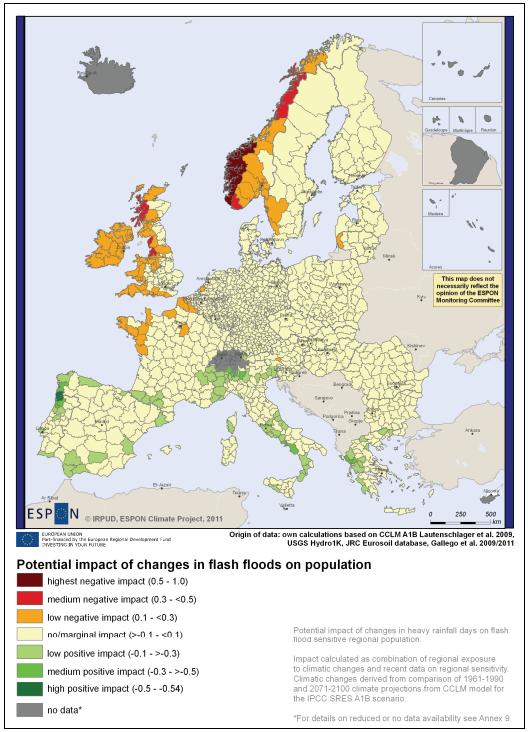
ON CLIMATE – Climate Change and Territorial Effects on Regions and Local Economies in Europe, final scientific report [accessed online] https://www.espon.eu/climate
The European Union published a new European Disability Strategy, including actions for inclusive disaster risk reduction and specific emergency shelter repairs for persons with disabilities in Bangladesh.
The correct answer is:
The Strategy commits to ensuring that the needs of persons with disabilities are adequately addressed in EU-funded humanitarian aid by involving persons with disabilities, cooperating with civil society, and supporting capacity building. Recent examples of EU-funded actions with disability inclusion measures as one of the focus areas include supporting communities in Bangladesh to better anticipate and act before monsoon floods inclusive disaster risk reduction and specific emergency shelter repairs targeted to persons with disabilities in Bangladesh advising local governments in the Philippines in scaling up inclusive cash assistance programmes that reach marginalized urban communities affected by disasters provision of supporting national and local governments in Mozambique in using drone and satellite data for disaster preparedness and assessing the extent of people’s needs following a natural hazard strengthening emergency preparedness and response in the Caribbean through better coordination of humanitarian logistics in the event of a natural hazard.
In the Republic of North Macedonia there are some recommendations about flood that you should follow to protect yourself and others before, during and after the flood.
The correct answer is:
Recommendations
Before the flood: Get your emergency bag ready
Learn about the environment and the local water resources
Learn about the evacuation guidelines
Get informed about the forecasts on TV so that you won’t be surprised
Place necessary items high
If you live in a flood sensitive area prepare your house by placing barriers to defend it against spills (bags of sand)
Prepare a ladder and a rope in case you need to climb on the top of the roof
If you can, prepare yourself to have a lifeboat and a lifeguard
During the flood: Τurn off all the electrical devices and household appliances before the evacuation of your house
Move to higher locations if necessary
Never cross storm water on foot or in a vehicle
After the flood: Do not swim to cross the flooded areas
Never drive in flooded areas
Avoid stagnant waters that could be electric-current conductors if there are power cables or leaks.
Do not come back home until you are sure it is safe
Progress: 8 of 9
9.
When you are in risky areas you have to follow some instructions on how to prevent flooding phenomena in accordance with the guidelines of Republic of North Macedonia such as:
The correct answer is:
You should behave responsibly and with calmness during the flood
Progress: 9 of 9
Correct answers: 0 of 0
Congratulations you have completed the quiz!
Manage Cookie Consent
To provide the best experiences, we use technologies like cookies to store and/or access device information. Consenting to these technologies will allow us to process data such as browsing behavior or unique IDs on this site. Not consenting or withdrawing consent, may adversely affect certain features and functions.
Functional
Always active
The technical storage or access is strictly necessary for the legitimate purpose of enabling the use of a specific service explicitly requested by the subscriber or user, or for the sole purpose of carrying out the transmission of a communication over an electronic communications network.
Preferences
The technical storage or access is necessary for the legitimate purpose of storing preferences that are not requested by the subscriber or user.
Statistics
The technical storage or access that is used exclusively for statistical purposes.The technical storage or access that is used exclusively for anonymous statistical purposes. Without a subpoena, voluntary compliance on the part of your Internet Service Provider, or additional records from a third party, information stored or retrieved for this purpose alone cannot usually be used to identify you.
Marketing
The technical storage or access is required to create user profiles to send advertising, or to track the user on a website or across several websites for similar marketing purposes.