
EU CIVIL PROTECTION MECHANISM QUIZ
In October 2001, the European Commission established the EU Civil Protection Mechanism. The Mechanism aims to strengthen cooperation between the EU countries and 9 other participating states (Albania, Bosnia and Herzegovina, Iceland, Montenegro, Republic of North Macedonia, Norway, Serbia, Republic of Turkey and Ukraine) on civil protection to improve prevention, preparedness, and response to disasters.
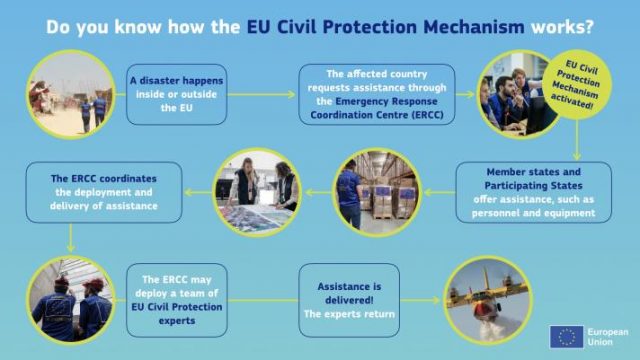
When an emergency overwhelms the response capabilities of a country in Europe and beyond, the state concerned can request assistance through this Mechanism. The Commission plays a key role in coordinating the disaster response worldwide, contributing to at least 75% of the transport and/or operational costs of the deployments of its resources.
Is it important to have an EU Civil Protection Mechanism?
In recent years, the EU has seen a wide range of adverse events that caused the devastation of human life, property, the environment and cultural heritage.
The EU is expected to experience more extreme events and increased exposure and vulnerability to disasters. For instance, climate change is bringing along more extreme weather events, sea-level rise and even changes in the geographical distribution of some infectious diseases.
Continued urbanisation and development in hazardous areas have been putting more people and wealth in harm’s way, with urban settings amplifying disaster risks such as floods, heatwaves or epidemics.
Environmental degradation in Europe and globally is reducing the capacity of ecosystems to protect us against the impact of disasters.
In the EU, from 1980 to 2020, natural hazards affected nearly 50 million people and have cost Member States on average €12 billion per year.
Indeed, against this complex backdrop, it is crucial to have arrangements in place for the effective prevention, mitigation, preparedness, response and recovery from disasters.
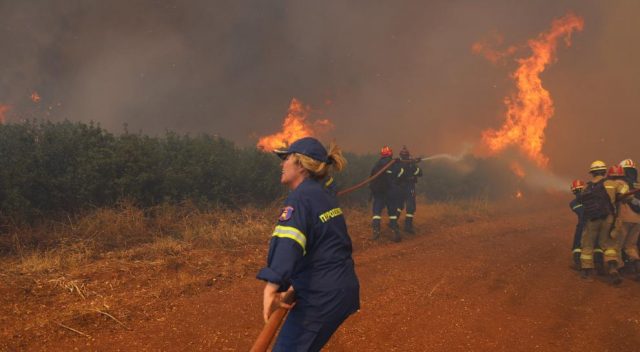
Urban settings amplify disaster risks such as floods, heatwaves or epidemics.
Continued urbanisation and development in hazardous areas have been putting more people and wealth in harm’s way. Indeed, environmental degradation in Europe and globally is reducing the capacity of ecosystems to protect us against the impact of disasters and thus urban development is developing in weight of nature, amplifying thus relevant risks.
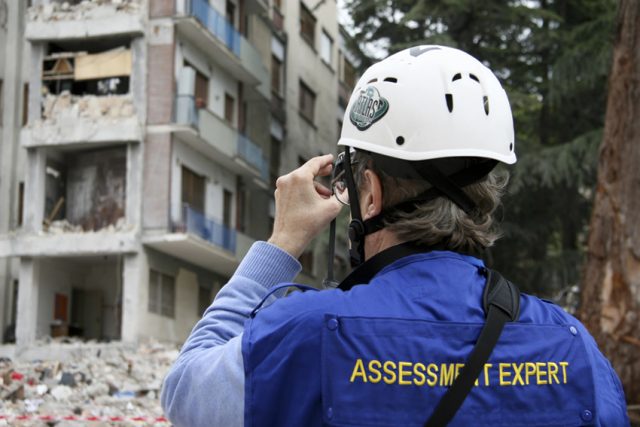
Joint approaches are often dysfunctional and make national authorities overwhelmed.
Disasters know no borders and can simultaneously hit one or several countries without warning. Having a well-coordinated joint response system means that when national authorities are overwhelmed, they have one point of contact rather than multiple to deal with.
A joint approach helps further pool expertise and capacities of first responders, avoids duplication of relief efforts, and ensures that assistance meets the needs of those affected.
Pooling together civil protection capacities and capabilities constitutes the driver for a stronger and more coherent collective response.
What is the Copernicus programme?
Copernicus is an EU programme aimed at developing European information services based on satellite Earth Observation and in situ (non space) data.
Copernicus is implemented by the European Commission (EC) with the support from the European Space Agency (ESA) for the Space component and the European Environment Agency (EEA) for the in situ component.
The objective of Copernicus is to monitor and forecast the state of the environment on land, sea and in the atmosphere, in order to support climate change mitigation and adaptation strategies, the efficient management of emergency situations and the improvement of the security of every citizen. Information provided by Copernicus improves people’s safety, e.g. by providing information on natural disasters such as forest fires or floods, and thus help to prevent the loss of lives and property, and damages to the environment.
Copernicus is a user driven programme and the information services provided are available to its Users, mostly public authorities, on a full, open and free-of-charge basis.
The Copernicus Programme is served by dedicated satellites (the Copernicus Sentinel families) and a set of additional Contributing Missions (satellites run by various commercial and national agencies). Since the launch of Sentinel-1A in 2014, the European Union set in motion a process to place a constellation of almost 20 more satellites in orbit before 2030. This satellite data is complemented by and validated with in situ data.
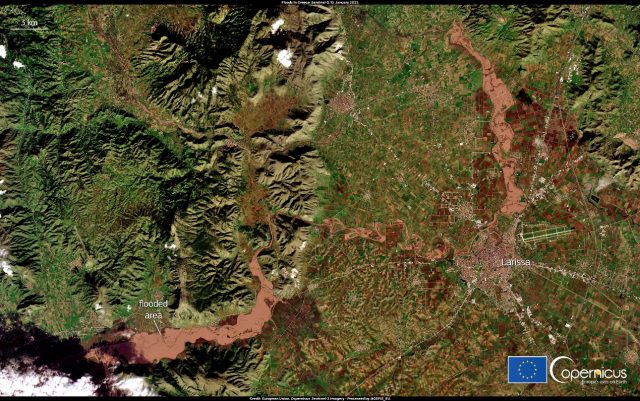
Six Copernicus Services transform the full, free and open data into value-added information by processing and analyzing the data and transforming them into services and products such as informative maps and data sets:
• The Copernicus Atmosphere Monitoring Service
• The Copernicus Marine Environment Monitoring Service
• The Copernicus Land Monitoring Service
• The Copernicus Climate Change Service
• The Copernicus Emergency Management Service
• The Copernicus Security Service)
watch the relevant video here.
As the EU Civil Protection Mechanism related to increased preparedness and response, it doesn’t really improve disaster resilience.
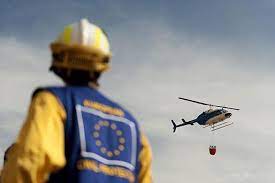
To improve resilience and planning for disaster prevention, preparedness and response, the Union should continue to advocate for investment in prevention of disasters across borders and sectors, and for comprehensive risk management approaches that underpin prevention and preparedness, taking into account a multi-hazard approach, an ecosystem-based approach and the likely impacts of climate change, in close cooperation with the relevant scientific communities, key economic operators, regional and local authorities and non-governmental organisations operating in the field, without prejudice to the established Union coordination mechanisms and competence of the Member States. To that effect, the Commission should work together with Member States to define and develop Union disaster resilience goals in the area of civil protection, as a non-binding common baseline to support prevention and preparedness actions in the event of disasters with a high impact which cause or are capable of causing multi-national, trans-national and / or transboundary effects (i.e. effects on several countries, irrespective of whether they share a border or not). The Union disaster resilience goals should take into account the immediate social consequences of disasters and the need to ensure that critical societal functions are preserved.
(Source: REGULATION (EU) 2021/836 OF THE EUROPEAN PARLIAMENT AND OF THE COUNCIL of 20 May 2021 amending Decision No 1313/2013/EU on a Union Civil Protection Mechanism [accessed online] https://eur-lex.europa.eu/legal-content/EN/TXT/HTML/?uri=CELEX:32021R0836&rid=2#d1e40-1-1)
Since 2001, the EU civil protection mechanism has been activated over than … times inside and outside the EU.
Since 2001, the EU civil protection mechanism has been activated over than 650 times inside and outside the EU.
Recent activations include:
- the earthquake in Türkiye and Syria (2023)
- Russia’s war on Ukraine (2022-2023)
- the COVID-19 health emergency (2020-2022)
- forest fires in Europe (2021-2022)
- repatriations from Afghanistan (2021)

rescEU is a European Mechanism not related to the EU Civil Protection Mechanism.
The European Commission upgraded the EU Civil Protection Mechanism and created rescEU to protect citizens from disasters and manage emerging risks. It is fully financed by the EU.
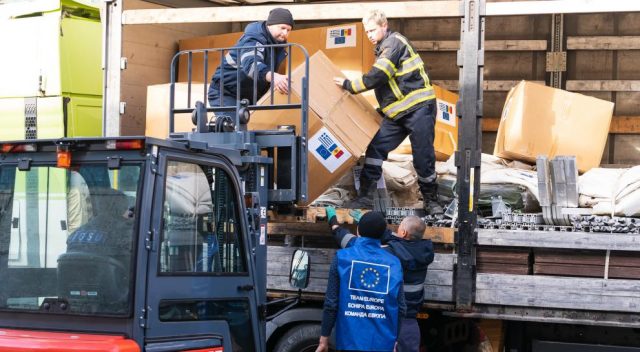
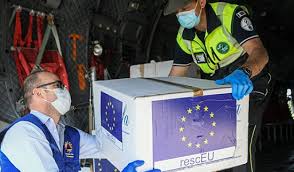
rescEU has established a new European reserve of resources (the ‘rescEU reserve’). It includes a fleet of firefighting planes and helicopters, medical evacuation planes, and a stockpile of medical items and field hospitals that can respond to health emergencies.)
What is the role of the DRMKC – Disaster Risk Management Knowledge Centre?
All of the above – The European Commission’s Disaster Risk Management Knowledge Centre integrates existing scientific multi-disciplinary knowledge and co-develops innovative solutions for existing needs. It also supports the translation of complex scientific data and analyses them into usable information and provides science-based advice for DRM policies.

The Emergency Response Coordination Centre (ERCC), operates only for EU member states.
The Emergency Response Coordination Centre (ERCC) is the heart of the EU Civil Protection Mechanism. It coordinates the delivery of assistance to disaster-stricken countries, in other words it deals with the provision of relief items, expertise, civil protection teams and specialised equipment.
The centre ensures the rapid deployment of emergency support and acts as a coordination hub between all EU Member States, the 9 additional participating states, the affected country, and civil protection and humanitarian experts.
The ERCC operates 24/7 and can help any country inside or outside the EU affected by a major disaster upon request from the national authorities or a UN body.)
For more information regarding the ERCC, click here.
